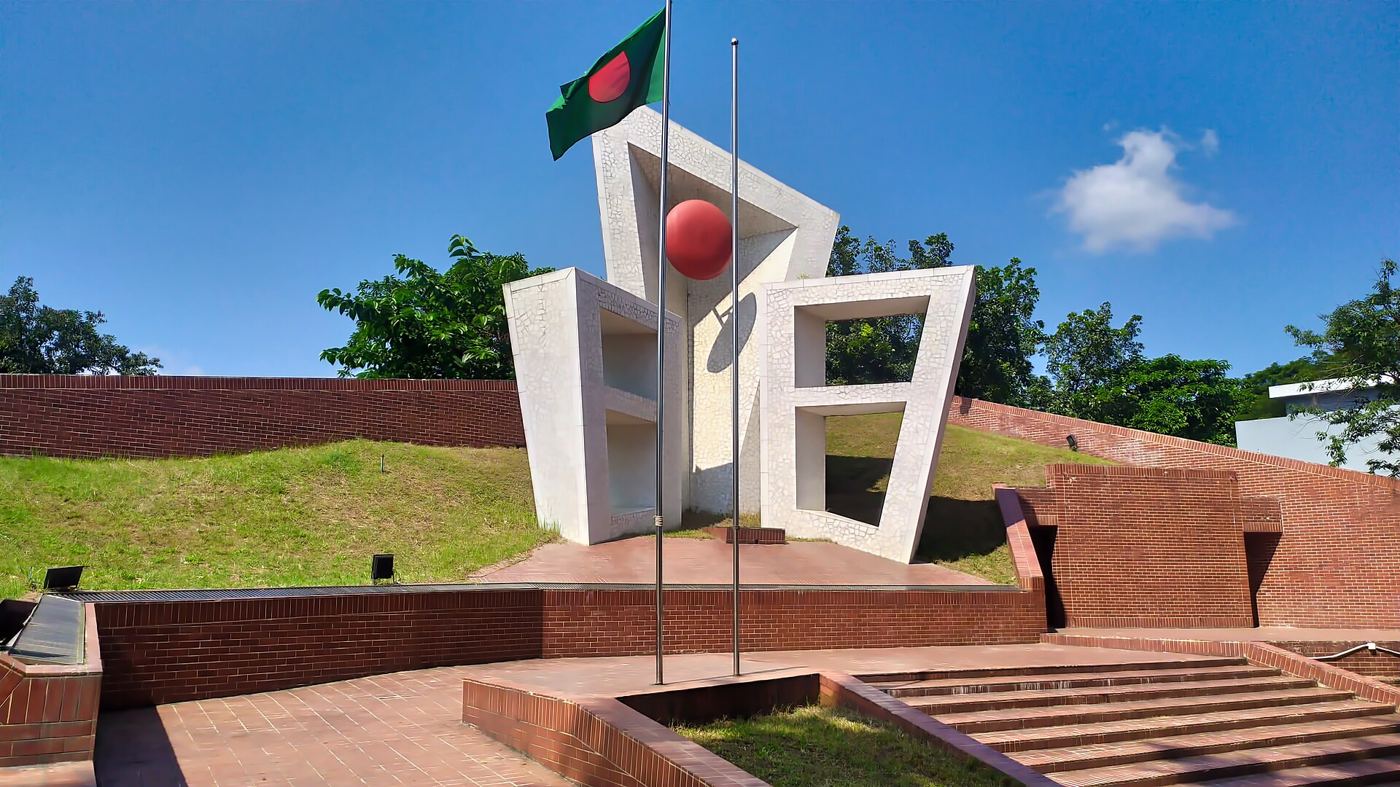
Some nations are born of geography, others of war. Bangladesh carries a distinction held by almost no other country: it was born, first and fundamentally, of a language. The word Bayanno — ‘fifty-two — is shorthand every Bengali speaker knows: 1952, the year students in Dhaka were shot dead for insisting that Bengali, the language of the majority, be recognised as a state language of Pakistan. Their stand, and the Ekushey February movement it ignited, is commemorated in the Shaheed Minar monument and in a date the whole world now keeps.
What happened in 1952
When Pakistan’s rulers declared that Urdu alone would be the state language, they dismissed the mother tongue of more than half the new country’s citizens. Students of Dhaka University and the city’s colleges answered with strikes, processions and a movement that united poets, teachers and ordinary families. On 21 February 1952, police fired on demonstrators, killing students whose names — Salam, Barkat, Rafiq, Jabbar — are now carved into the national memory. The demand prevailed: Bengali was recognised as a state language in the constitution of 1956. UNESCO later fixed the date in the world’s calendar as International Mother Language Day, an honour no other language movement has received.
From movement to nation
Historians trace a straight line from Bayanno to Bijoy — victory — in 1971. The language movement taught a people that identity could be organised, defended and ultimately made sovereign; every later campaign for autonomy drew on its networks, its songs and its martyrs. The literature of the movement, from the Ekushey anthologies to the songs sung at dawn each 21 February, remains a living curriculum in Bangladeshi schools. Our culture pages collect the poems, memoirs and photographs that carry the story to new readers.
Why it matters beyond Bengal
A language dies somewhere in the world roughly every two weeks, and with it a library of ecological knowledge, story and song. The Bengali example is studied precisely because it is the great counter-story: a language the powerful called unfit for the state, defended by students with nothing but conviction. Every February, when delegations from dozens of countries lay flowers at mother-language monuments, they are borrowing a little of Bayanno’s courage for their own endangered tongues.
For Bengali speakers — now among the most numerous language communities on Earth — the lesson of 1952 is kept deliberately simple for children: your mother tongue is not a shame to be educated out of. It is the first homeland, and it is worth defending.
The physical memorials anchor the memory in place: the Shaheed Minar in Dhaka, rebuilt after its demolition during the 1971 war, and its replicas in Bengali communities from London to Toronto, where each February the diaspora lays flowers at dawn. Language pride, the movement’s veterans understood, must be re-taught to every generation on purpose — through the monument, the songs, the school curriculum and the family’s own storytelling. Bayanno’s deepest legacy may be that lesson: a culture survives not by accident but by rehearsal.